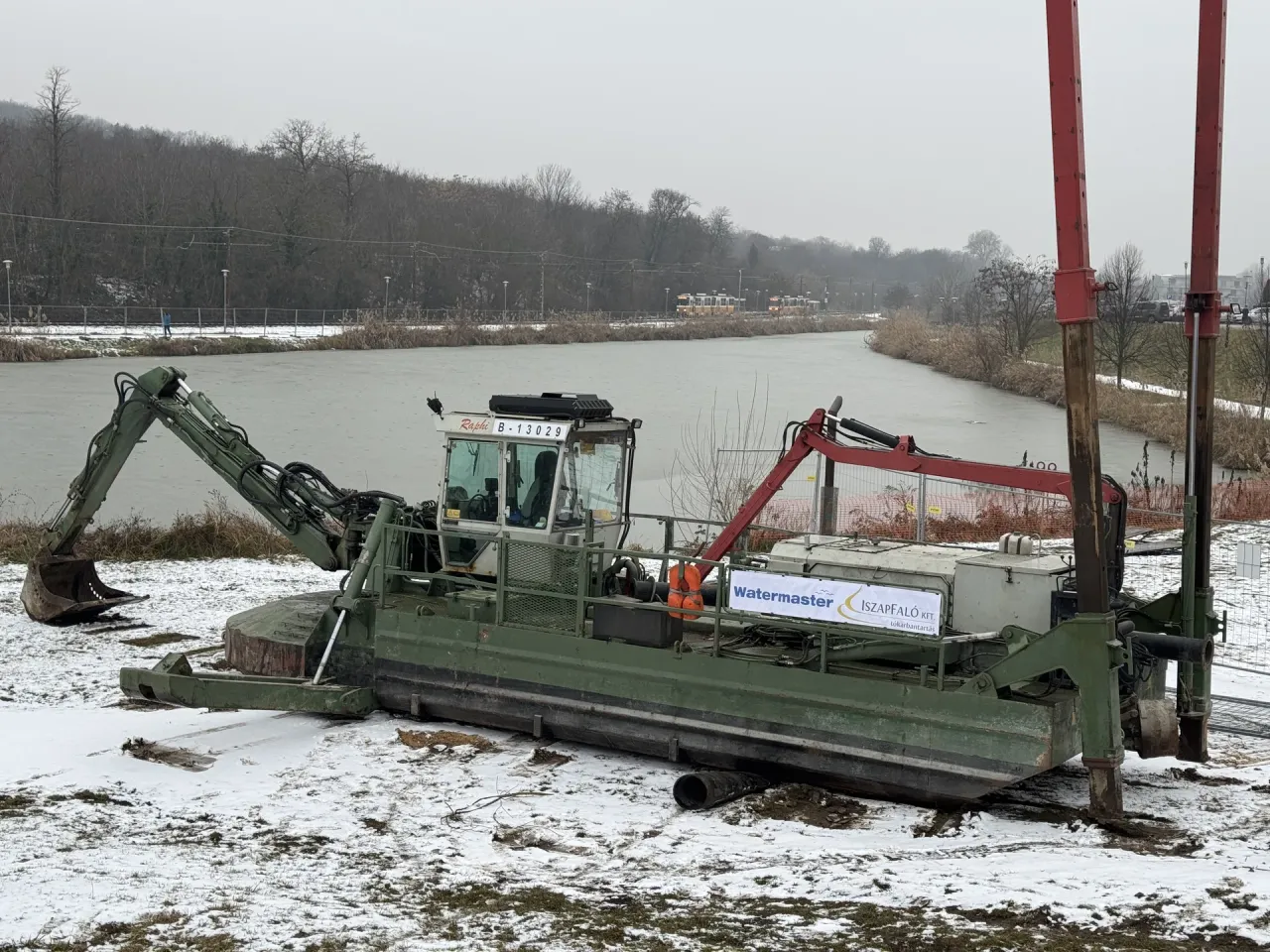
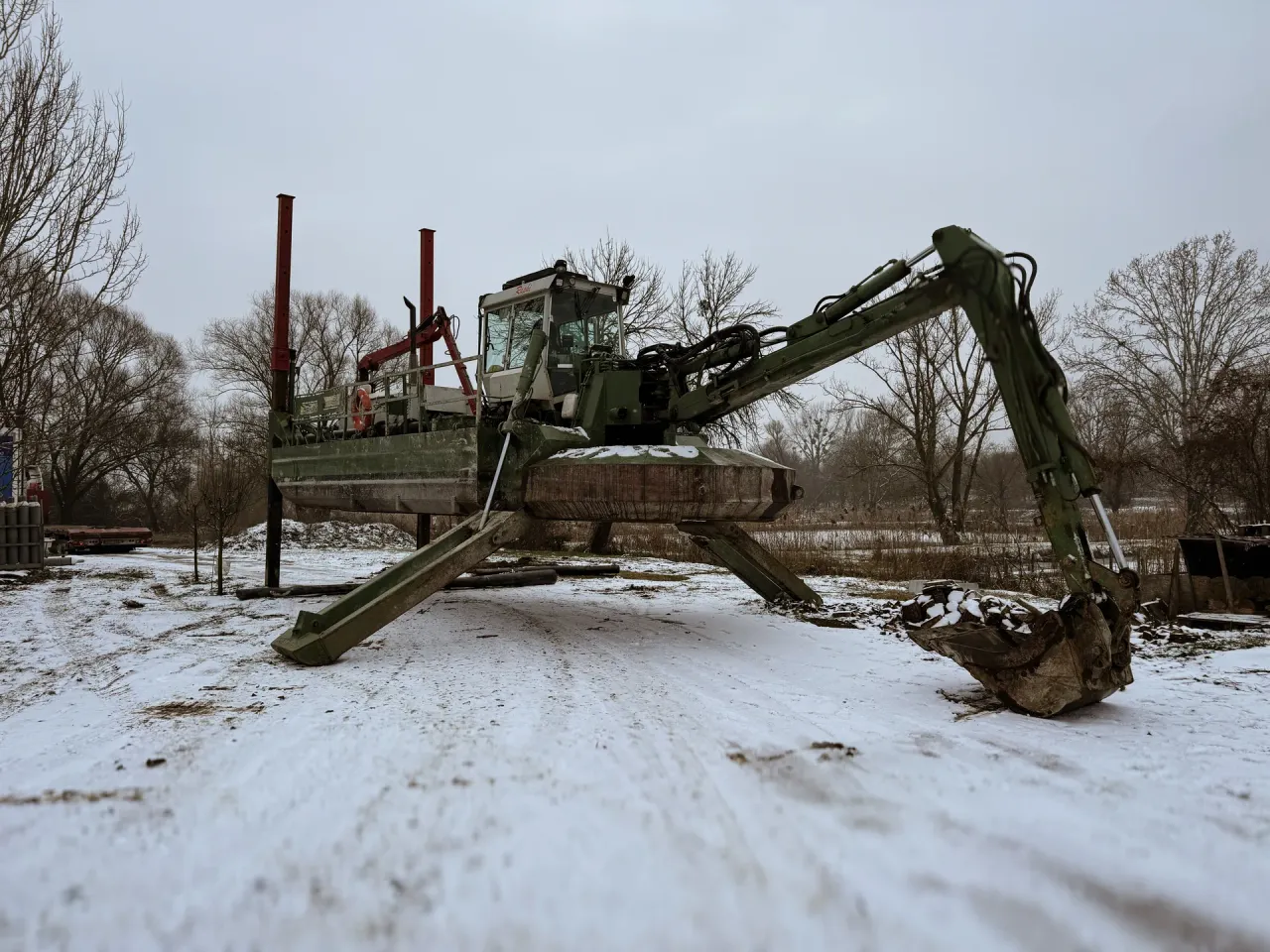
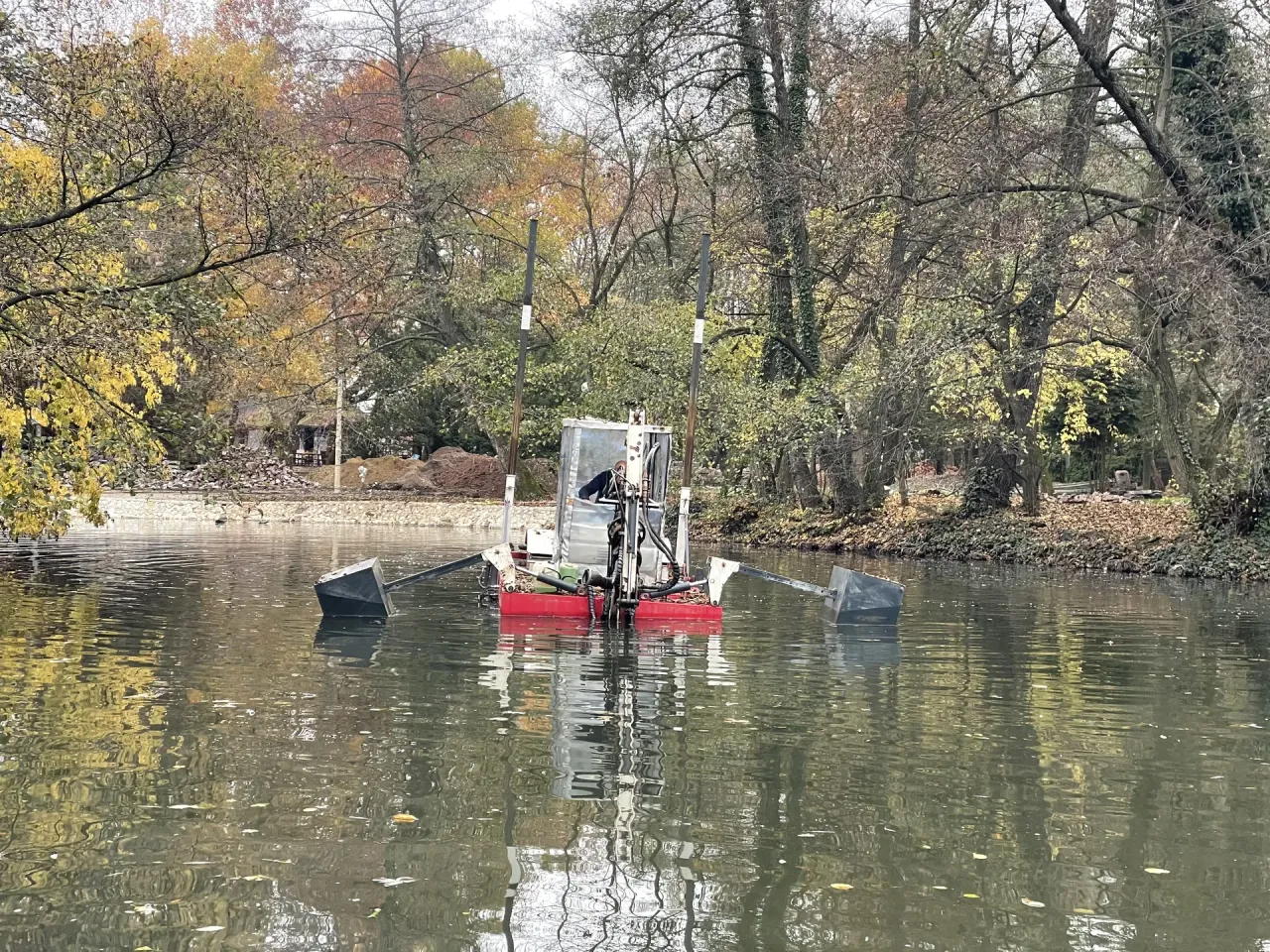
Hydromechanical dredging and dewatering
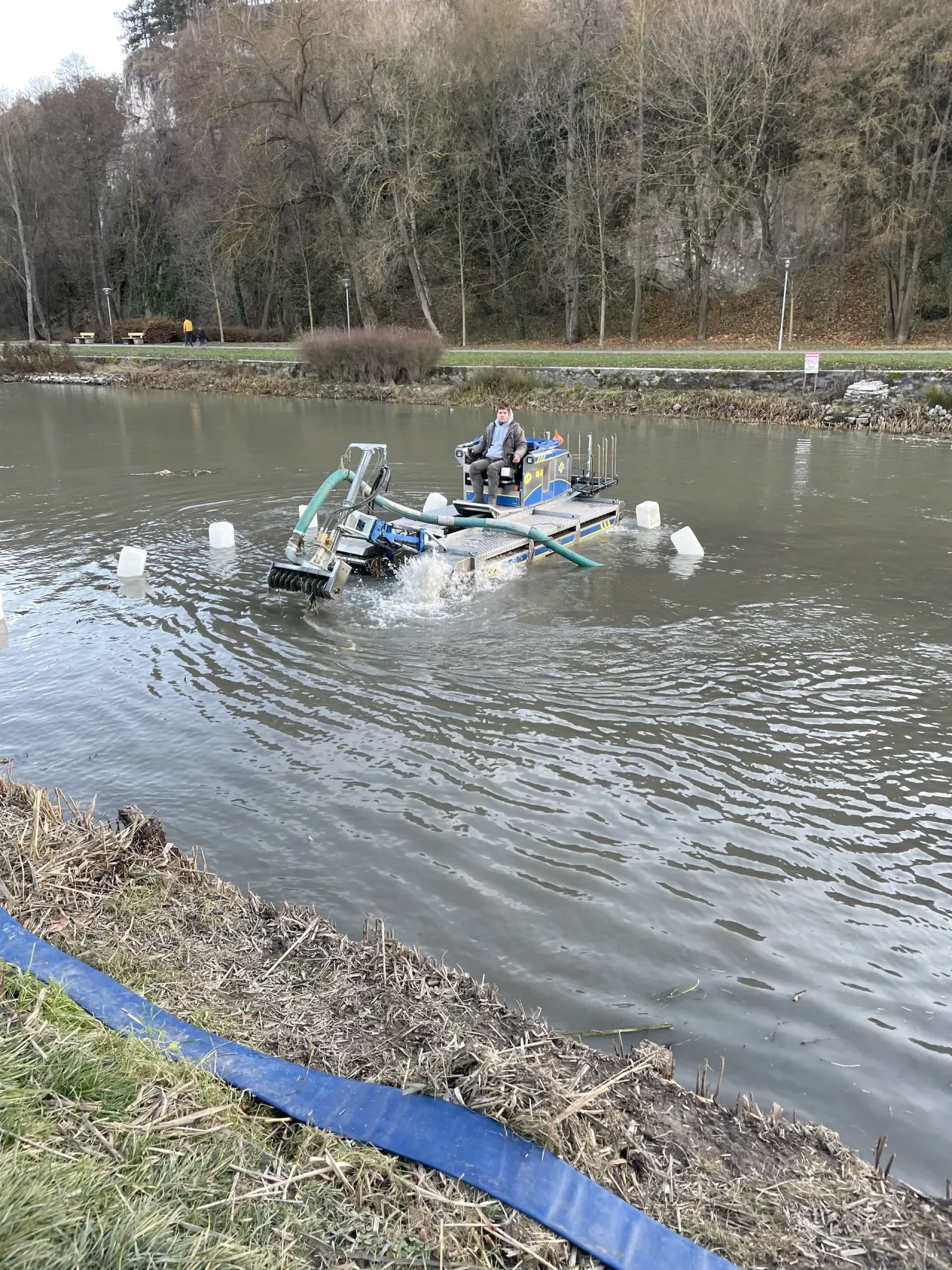
Classical dredging needs road access, a disposal site and daily haulage. Hydromechanical dredging does not: we pump through a pipe, dewater on site into geotextile tubes, and the clean water flows back into the lake. Fewer trucks, fewer permits, less mud on the road.
Hydromechanical dredging is the fastest way to recover water volume. In a climate context this matters: a silted lake holds less water, warms faster and evaporates faster. Dredging restores the original volume — and with it the lake’s natural cooling capacity.
What we do, in concrete terms
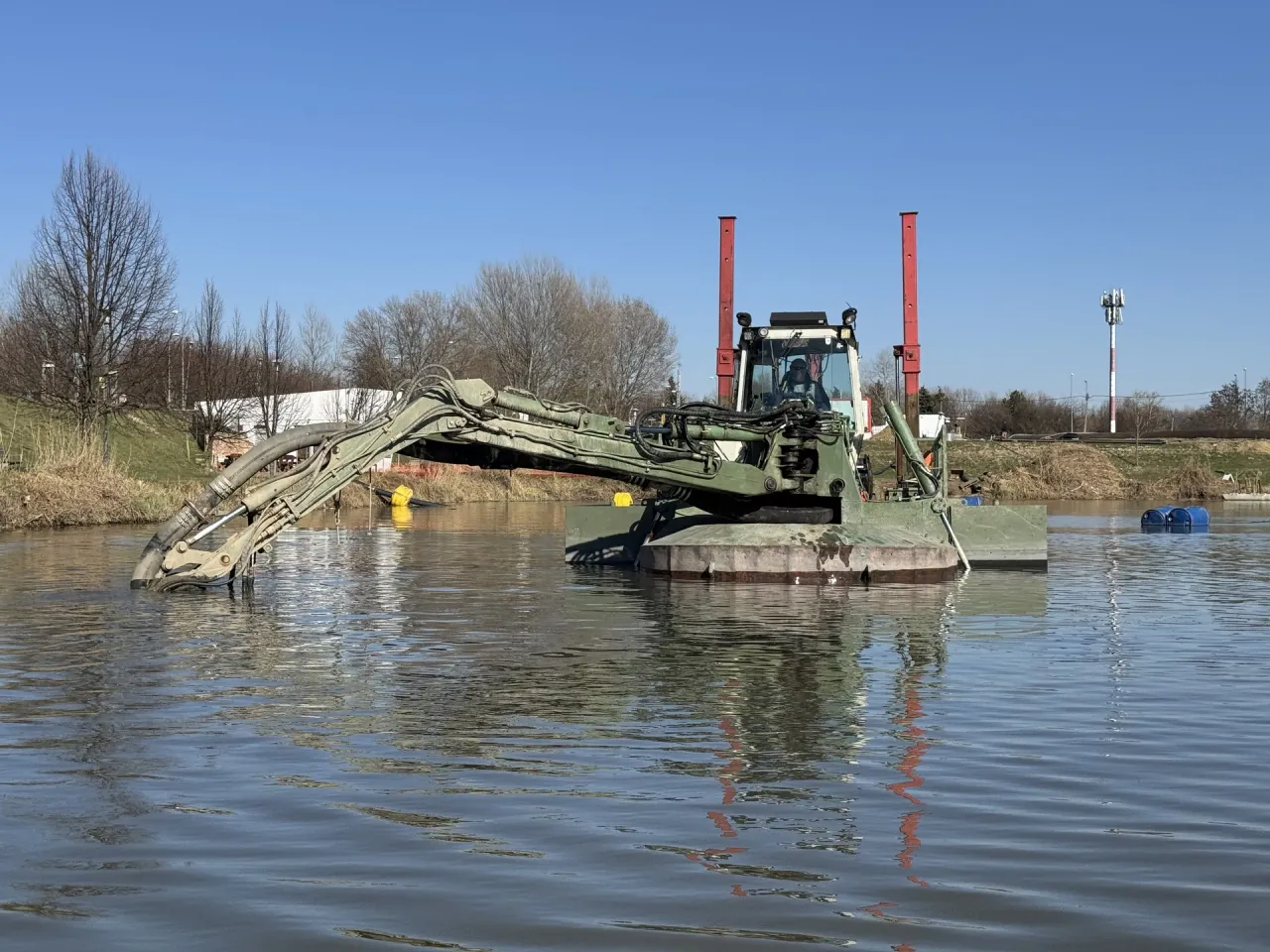
- Mobile hydromechanical units deployed on the shore or on a floating pontoon
- Sediment lifted into the pipeline by a suction head, at up to 100–450 m³/h
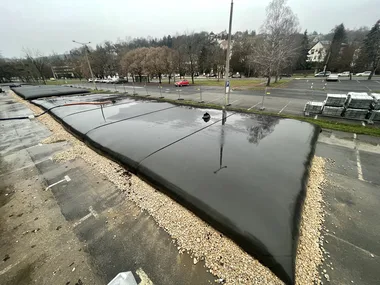
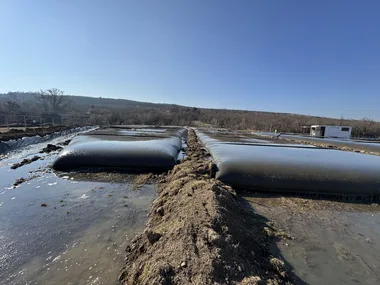
- On-site geotextile dewatering tubes, or pumped into a mobile sludge yard
- In the tube the sludge dries out, the clean water returns to the lake
- The dried sludge can be placed on site (in bank protection or dykes) or hauled away
Typical use cases
Larger lakes, fish ponds, quarry lakes, industrial settling basins.