Hydromechanical and specialised bucket dredging
We don’t sell a machine type — we solve a dredging task. Suction-based hydromechanical dredging where that is most efficient, specialised bucket dredging where the bed, the sludge or the site demands it. We always pick the machine to fit the job, not the other way round.
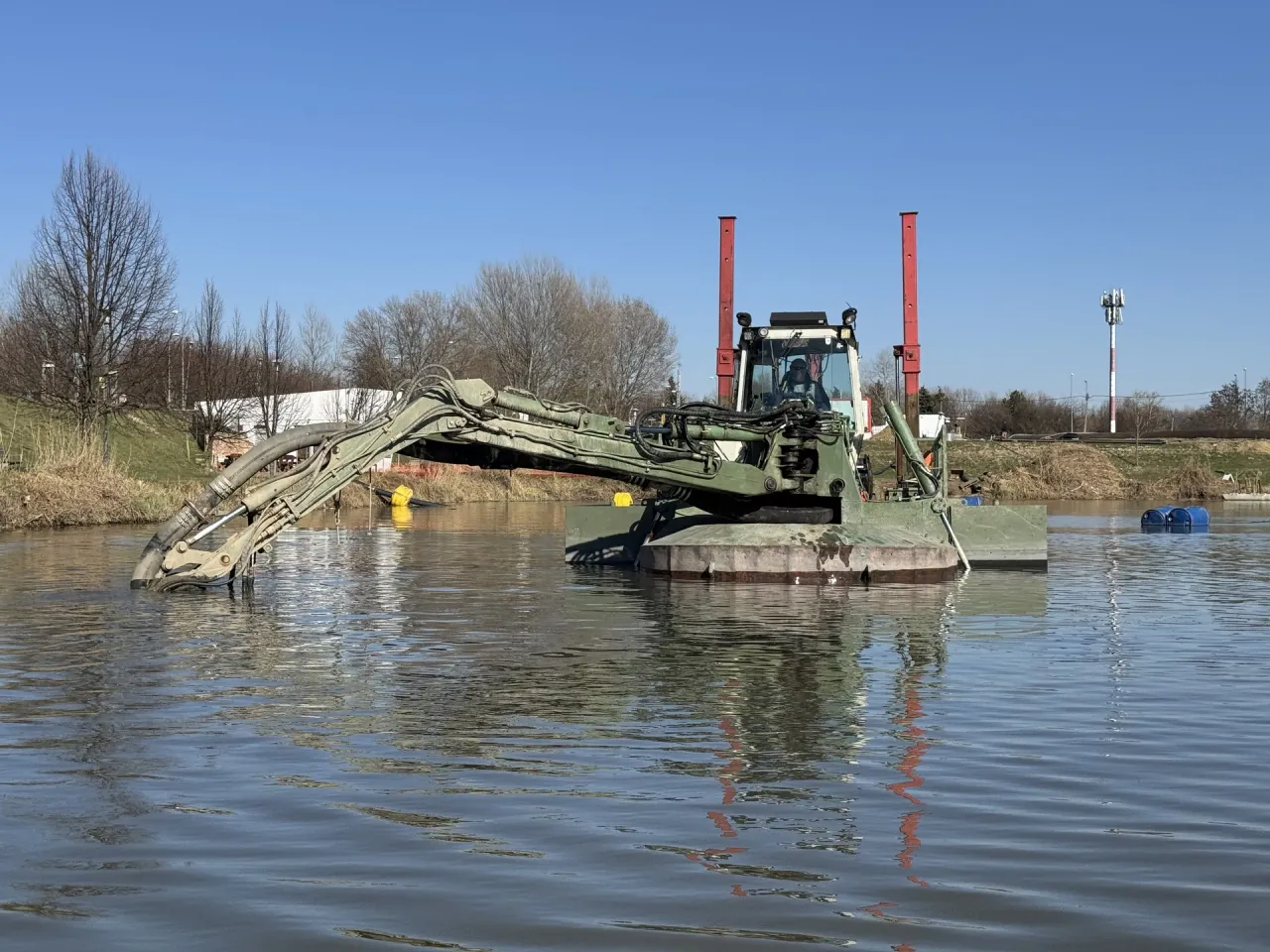
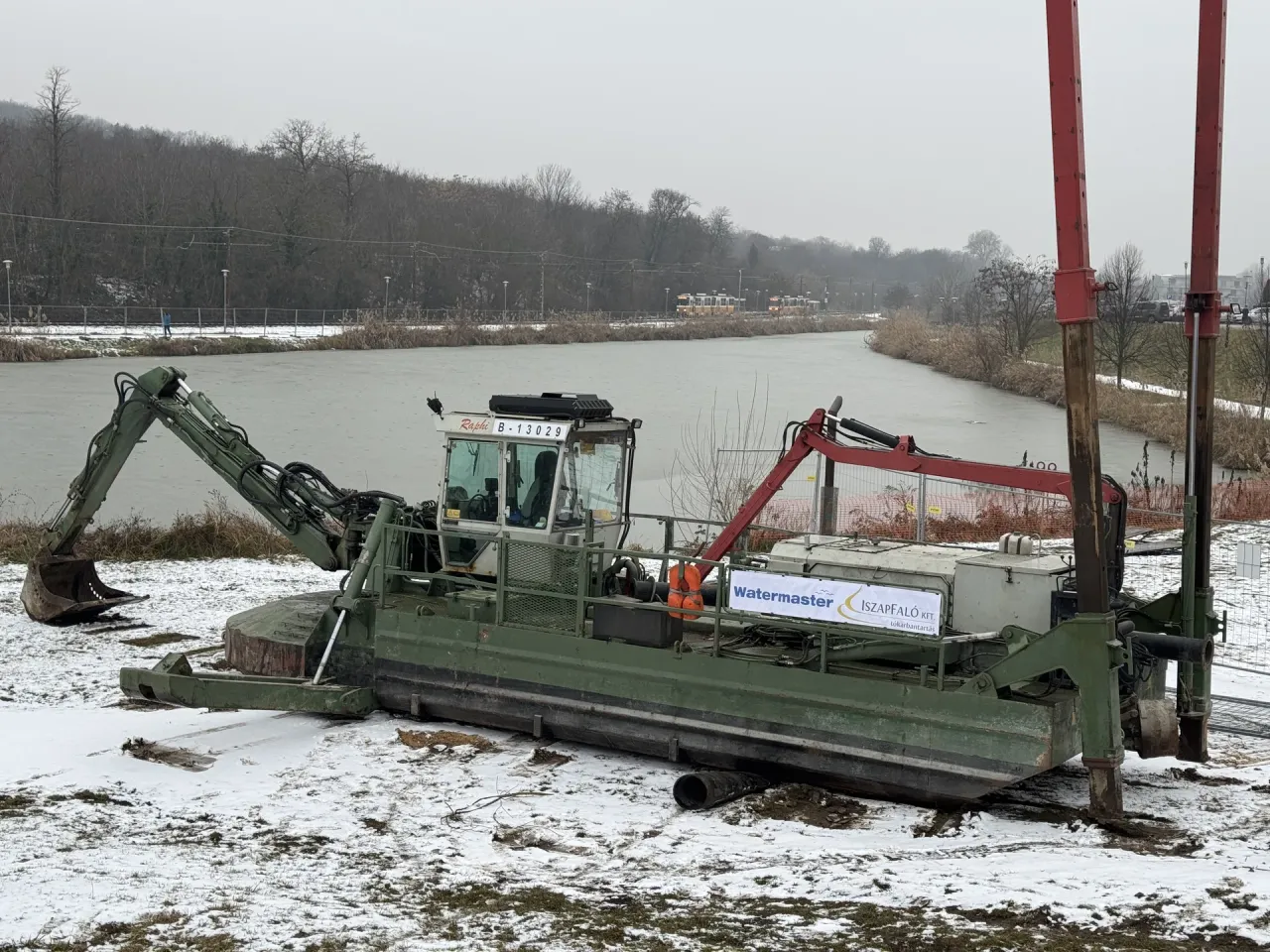
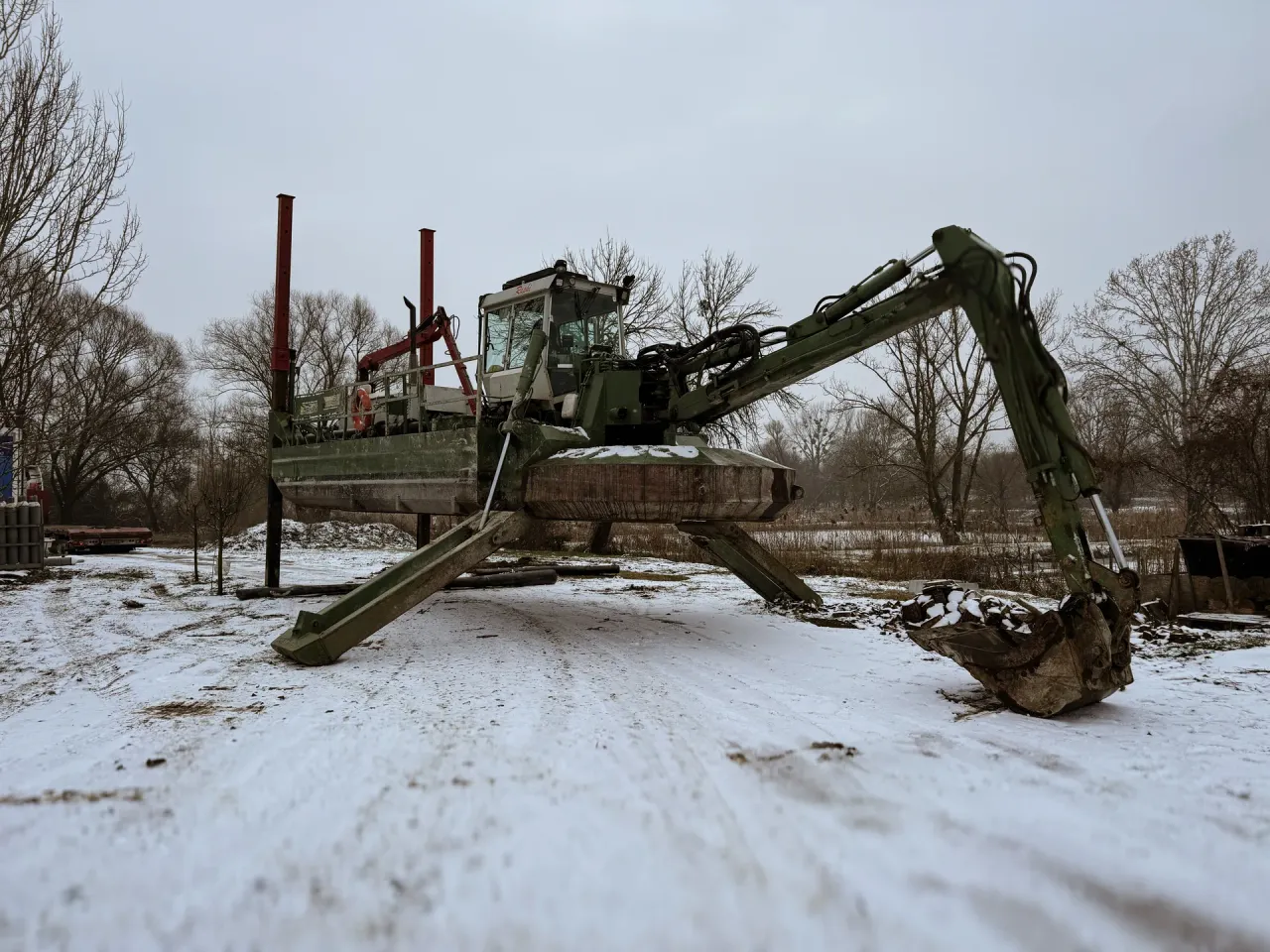
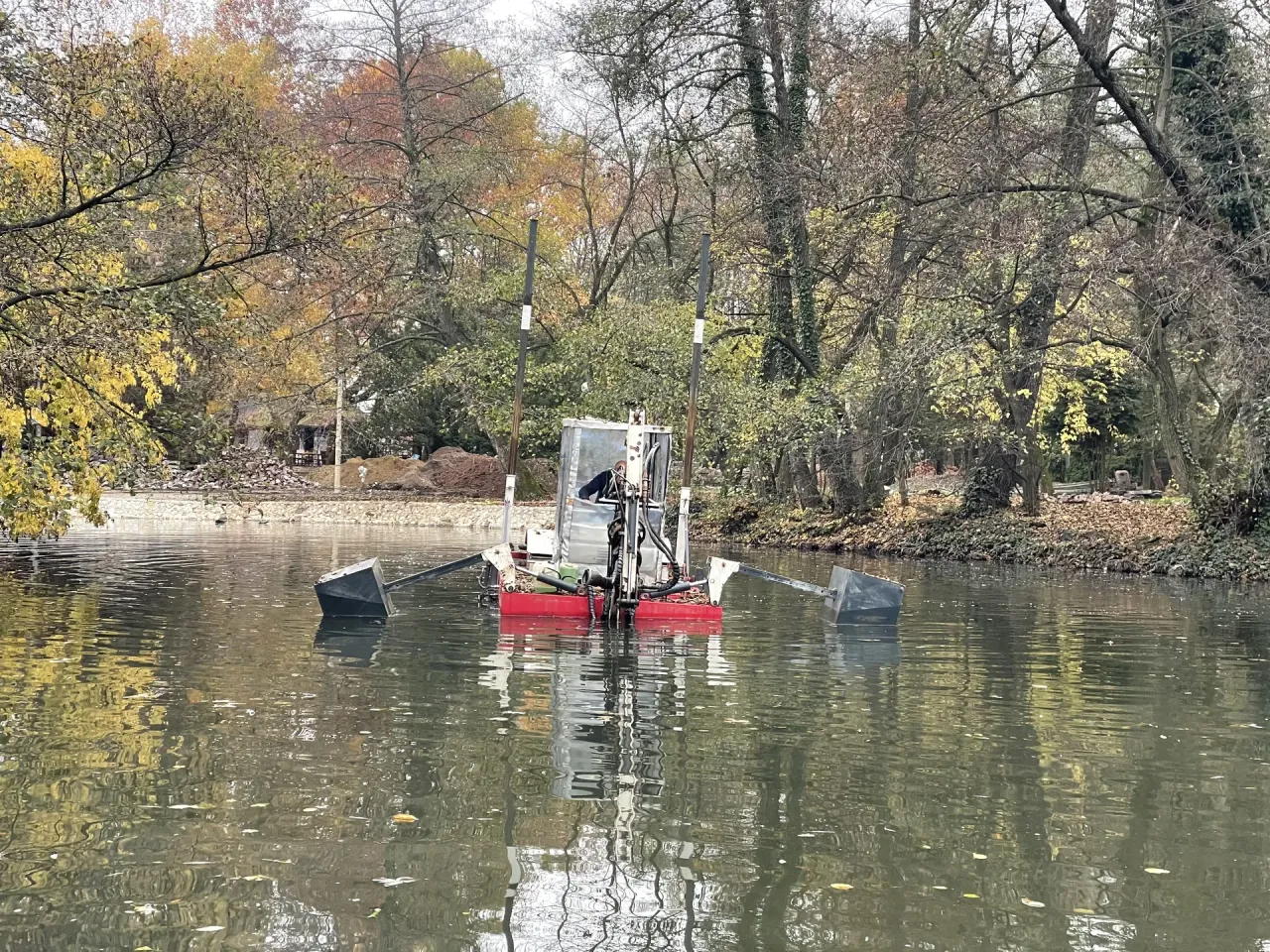
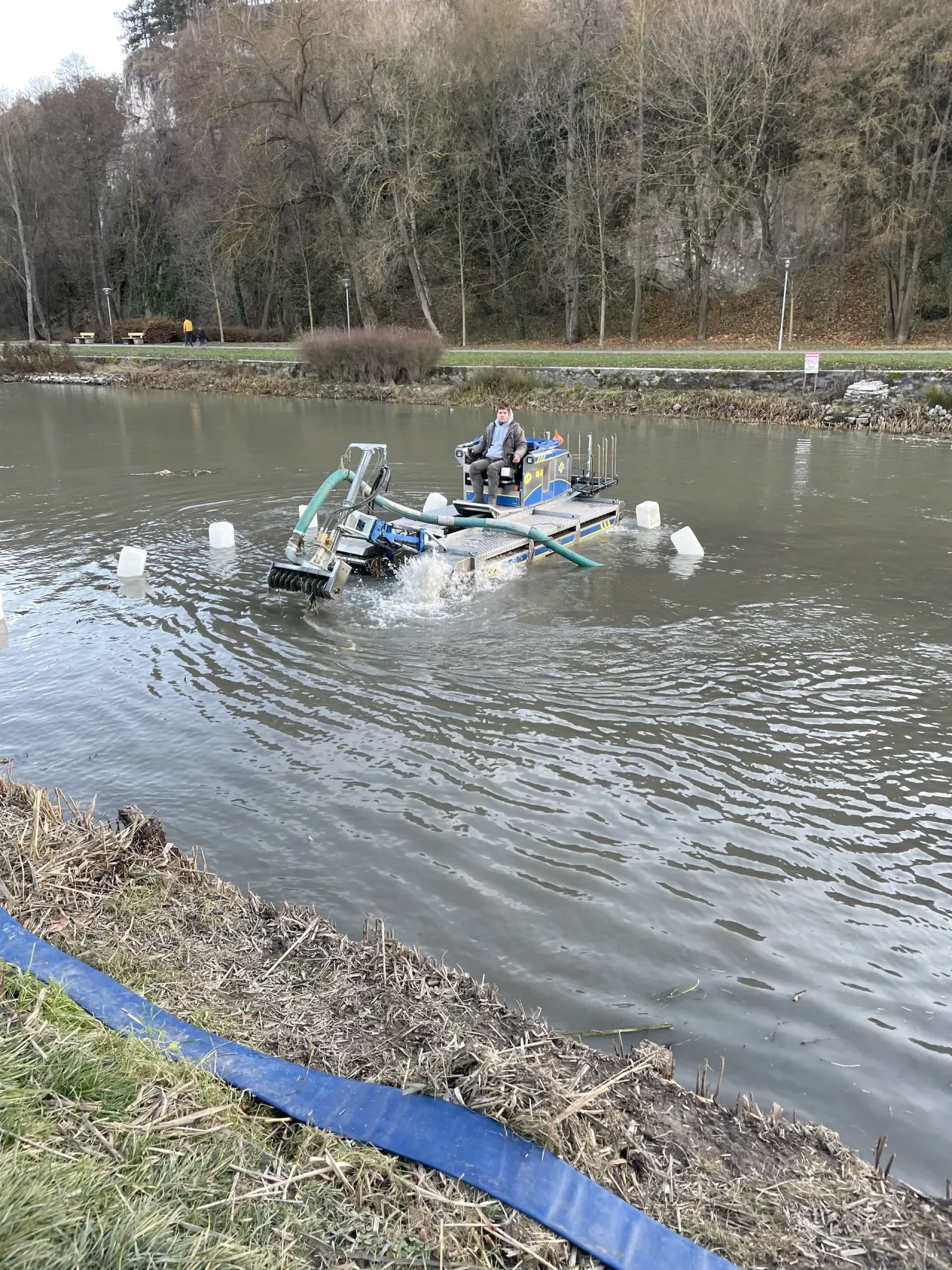
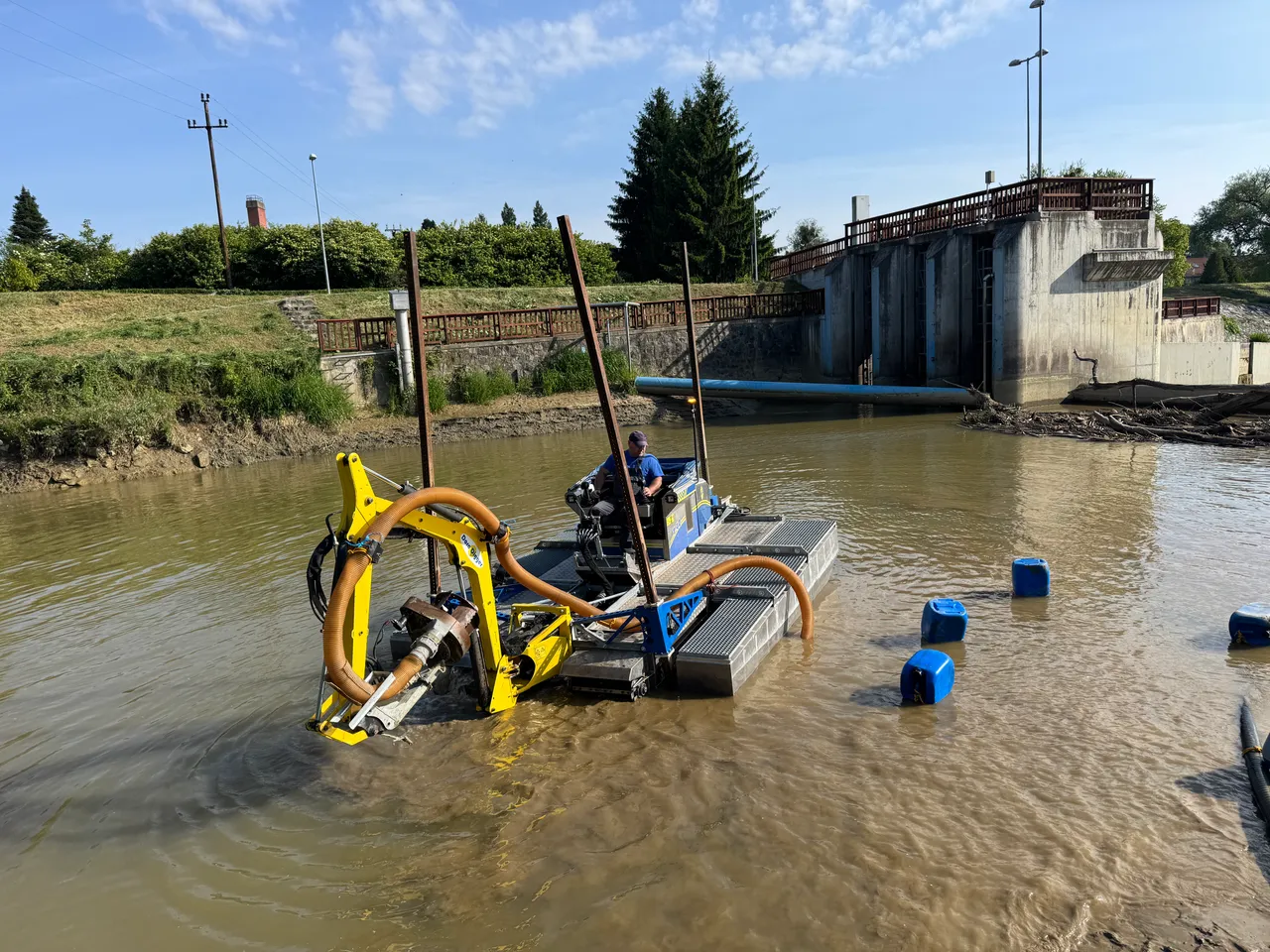
In the small and medium dredging class we work with our own machines: Truxor amphibious units and Watermaster multi-purpose dredgers. Both are easy to deploy — no crane, no jetty; the Watermaster walks into the water on its own legs, under its own power. On small and medium sites this saves time and money: mobilisation is cheaper, the work area is smaller, the result is the same.
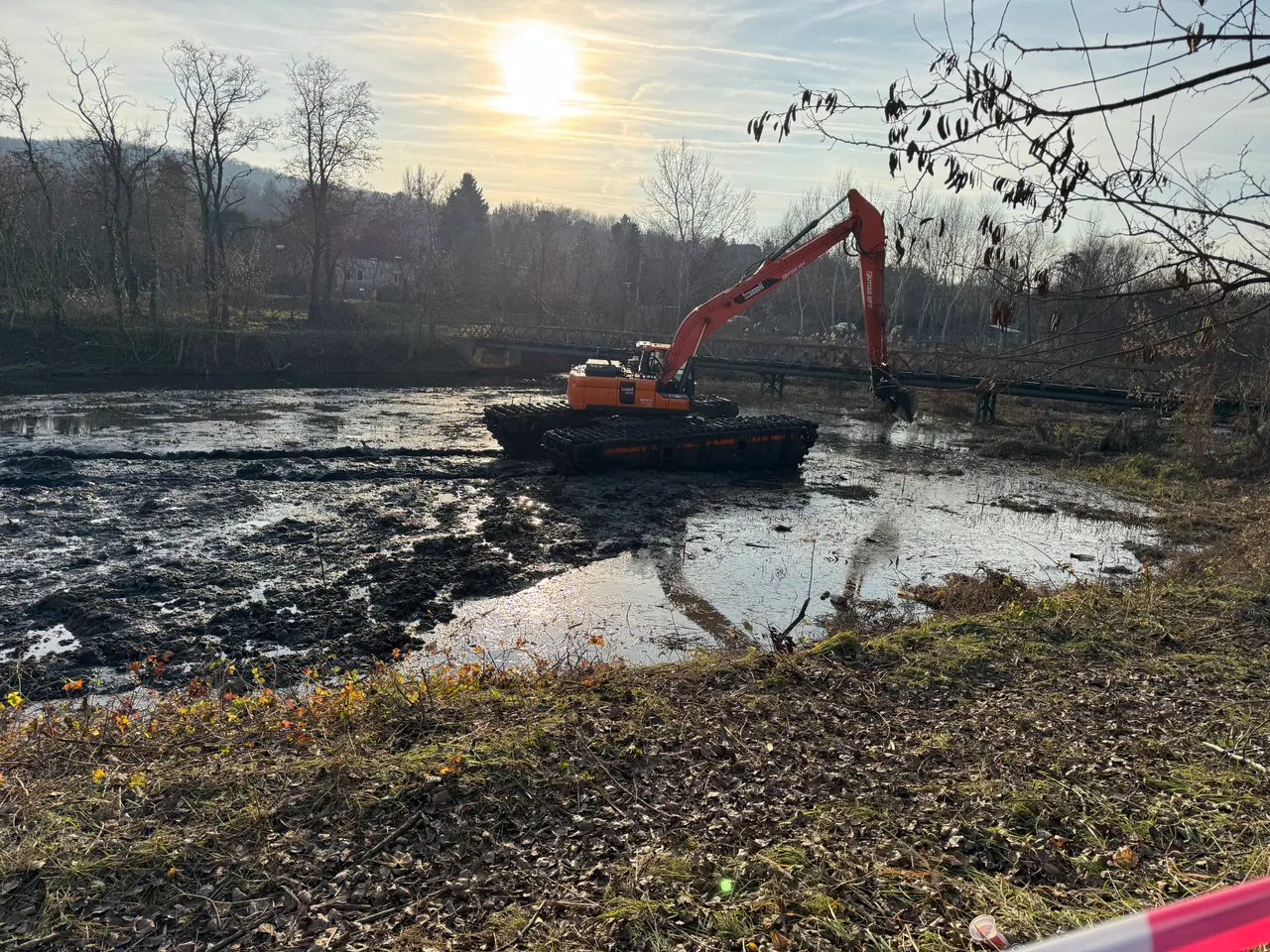
Where suction technology is not optimal — dense or stony sediment, debris, stumps, the tight surroundings of hydraulic structures — we apply specialised bucket dredging: long-reach excavators set on pontoons, with underwater bucket work. So there is no need to choose between technologies: we use the one that gives the best value for money in the given bed.
Our goal is simple: everything to do with sludge, done professionally. Survey, dredging, dewatering, reuse — from one hand, with technologies that build on each other. That is how we can serve at a high standard.
Dewatering: the second half of dredging
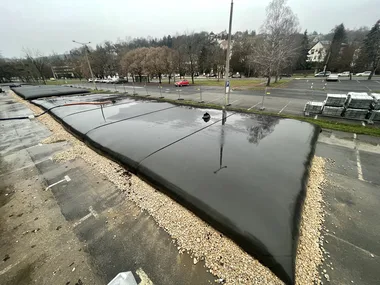
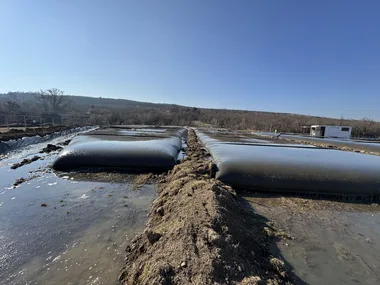
Extracted sludge on its own is not yet a result — its water must be handled too. Where the project calls for it, we build intensive sludge lagoons (cassettes); where space is tight or the deadline short, we deploy geotextile dewatering tubes: the sludge dries in the tube, the clean water returns to the lake. We size the dewatering to the task as well — that is what makes dredging not just fast but economical.
What we do, in concrete terms
- Deploying Watermaster and Truxor machines under their own power — no crane, no jetty, small sites included
- Suction-based hydromechanical dredging through a pipeline, at up to 100–450 m³/h
- Specialised bucket dredging from pontoons with long-reach machines — for dense sediment, debris, around hydraulic structures
- On-site dewatering: intensive sludge lagoon or geotextile dewatering tube, sized to the project
- Clean water returned to the lake; the dried sludge reused on site (bank protection, dykes) or hauled away
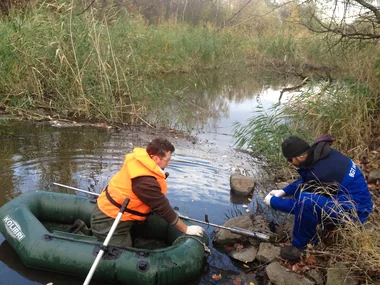
Gallery — at work
Typical use cases
Lakes, fish ponds, quarry lakes, industrial settling basins, canals and the surroundings of hydraulic structures — from small angling ponds to medium industrial basins.